GEO vs SEO: What Changes When People Search With AI?
GEO (generative engine optimization) and SEO share the same foundation: crawlable, indexed pages with useful, credible content. What changes is the unit of success. SEO earns a ranking and a click. GEO earns a mention or citation inside an answer from ChatGPT, Perplexity or Google's AI Overviews. That answer varies from run to run and often draws on sources you do not own.
In this GEO vs SEO comparison, GEO means generative engine optimization, not geo-targeted local SEO. Google's guide says that, for Google Search, optimizing for AI features is still SEO. So the real question is which work transfers and which does not. Platform facts are as of November 2026.
Is GEO just SEO with a new name?
Mostly the same foundation, but not the same job. Google and Microsoft draw the line in different places, which keeps the "is GEO the new SEO" debate alive.
Google's AI optimization guide (Search Central, last updated July 10, 2026) says its AI features are rooted in its core ranking and quality systems. They use retrieval-augmented generation and query fan-out to pull pages from the Search index. On the new labels, Google says optimizing for AI search is optimizing for search, "and thus still SEO."
Microsoft Advertising (October 8, 2025) says crawlability, metadata, internal links and backlinks still matter, but only as the starting point. What differs is selection: Copilot splits pages into small pieces and builds one answer from several sources.
Bing even calls its AI Performance report (February 10, 2026) an early step toward GEO tooling. The term itself comes from a paper, "GEO: Generative Engine Optimization" by Aggarwal et al. (arXiv, November 2023; accepted to KDD 2024).
What stays the same between GEO and SEO?
Crawl access, indexing and content quality are shared requirements. In Google, a good ranking also raises the odds of an AI Overview citation. But it is no guarantee, and estimates of how many citations come from the top 10 differ widely by method.
Crawl access and indexing are still the gate
To show as a supporting link in AI Overviews or AI Mode, a page must be indexed and eligible for a snippet (Google's AI features page). The other engines tie visibility to their search crawlers.
OpenAI says sites that block OAI-SearchBot will not be shown in ChatGPT search answers, though they can still appear as navigational links. Perplexity says PerplexityBot surfaces and links sites in its results. Anthropic says blocking Claude-SearchBot may reduce your visibility in user search results.
So a robots.txt rule written for SEO can quietly decide your GEO results too. Our ChatGPT search checklist covers which OpenAI bot to allow.
Content quality still decides
Google's guide asks for non-commodity content: pages with a point of view or first-hand experience that a summary of other pages cannot copy. It says you do not need to chunk pages, rewrite them for AI or add special schema. Google Search ignores llms.txt, so treat it, and structured data, as hygiene rather than a boost.
How many AI Overview citations come from the top 10?
Four published studies put the figure between about 17% and 76%. Read them side by side before you quote any one.
Share of Google AI Overview citations that also rank in Google's organic top 10 (published studies)
| Study (published) | Data period | Sample | Cited pages also in the top 10 |
|---|---|---|---|
| Ahrefs (July 21, 2025) | Not stated | 1M AI Overviews, top 3 citations each (1.9M) | 76% |
| BrightEdge (February 12, 2026) | Monthly, February to July 2025 | BrightEdge's tracked keyword set | About 17% (16.1% to 16.9% a month) |
| Ahrefs (March 2, 2026) | Not stated | 863K SERPs, 4M cited URLs, improved parser | 38% (blue links only: 37.1% in the top 10, 36.7% outside the top 100) |
| Conductor (September 4, 2026) | June 15 to August 15, 2026 | 167.9M US citations, every industry, no sampling | 43% |
Do not read these rows as a trend or average them. Ahrefs published its 76% in July 2025, inside the months BrightEdge's 17% covers. That gap reflects method and keyword set, not change over time.
Ahrefs itself reads its drop from about 76% to 38% as Google picking fewer pages straight from the results. Its 2026 study also counted more citations, not just the top 3.
- Ranking still helps. Ahrefs found a moderate correlation (Spearman 0.347) between a top 10 ranking and a top 3 citation (Ahrefs, July 21, 2025). Conductor found a page in position 1 is cited nearly 25% of the time, about 2.5 times the 10.2% rate at position 10.
- Weigh the source. All four come from firms that sell SEO or AI visibility tools: Ahrefs (whose 2026 data comes from its own Brand Radar), BrightEdge and Conductor. None is peer reviewed.
- Other assistants overlap less. Assistants such as ChatGPT, Gemini and Copilot cite Google's top 10 far less often than AI Overviews do. Perplexity overlaps the most (Ahrefs, August 11, 2025).
So SEO gets you into the candidate pool, but in all three studies published in 2026, most AI Overview citations came from outside the top 10.
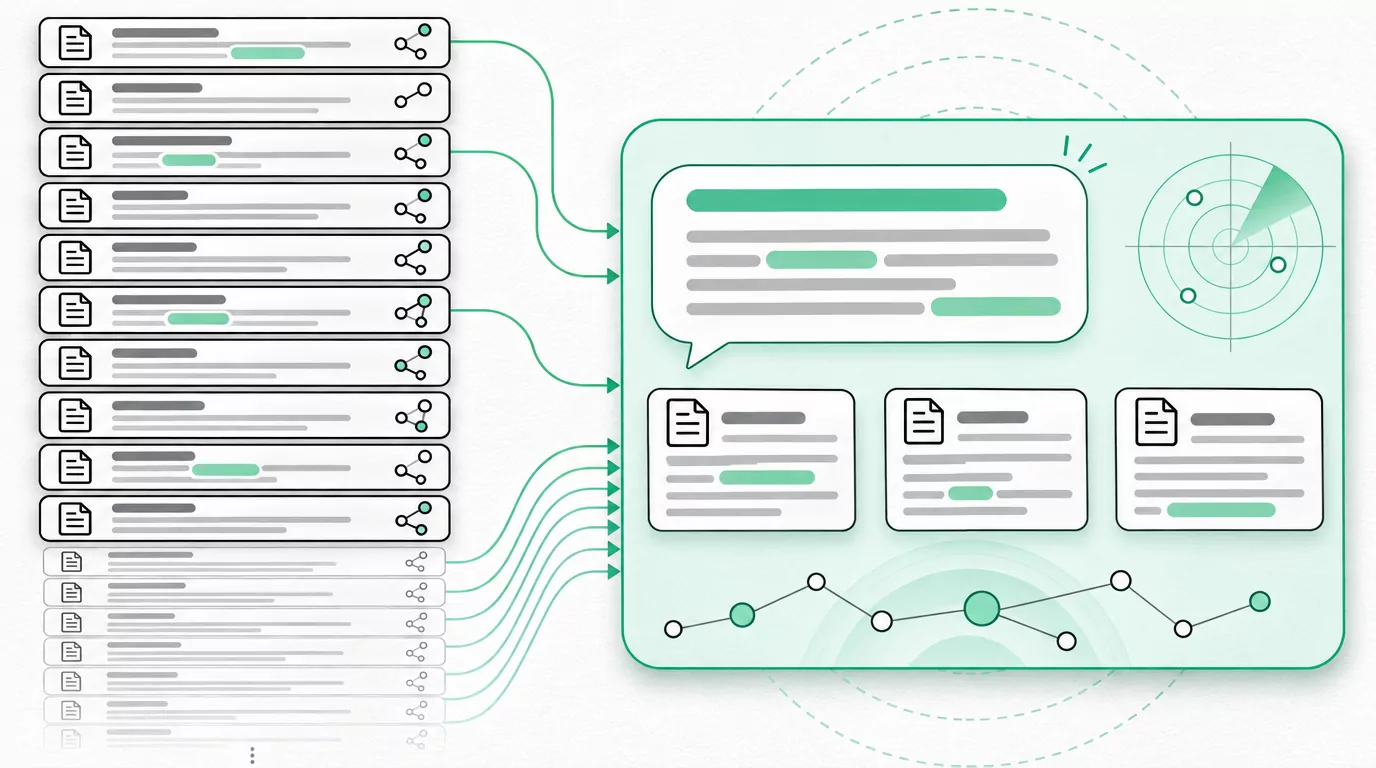
What changes when people search with AI?
Five things change: what counts as winning, which queries trigger AI answers, the weight of outside sources, click rates, and the controls and reports you use.
The unit of success is a mention or a citation, not a rank
SparkToro with Gumshoe (January 27, 2026) had 600 volunteers run 12 prompts through ChatGPT, Claude and Google's AI Overviews or AI Mode, 2,961 times in all. ChatGPT and Google's AI had under a 1 in 100 chance of repeating a brand list. Claude was only slightly more consistent. For all three, the same list in the same order came up under once in 1,000 runs.
Gumshoe sells AI tracking, and the work was not peer reviewed. Still, SparkToro concludes that visibility percentage across dozens to hundreds of prompts, each run several times, is a reasonable metric. A ranking position in AI is not.
So report rates and ranges: how often each engine mentions you and cites your pages, versus named competitors (your AI share of voice).
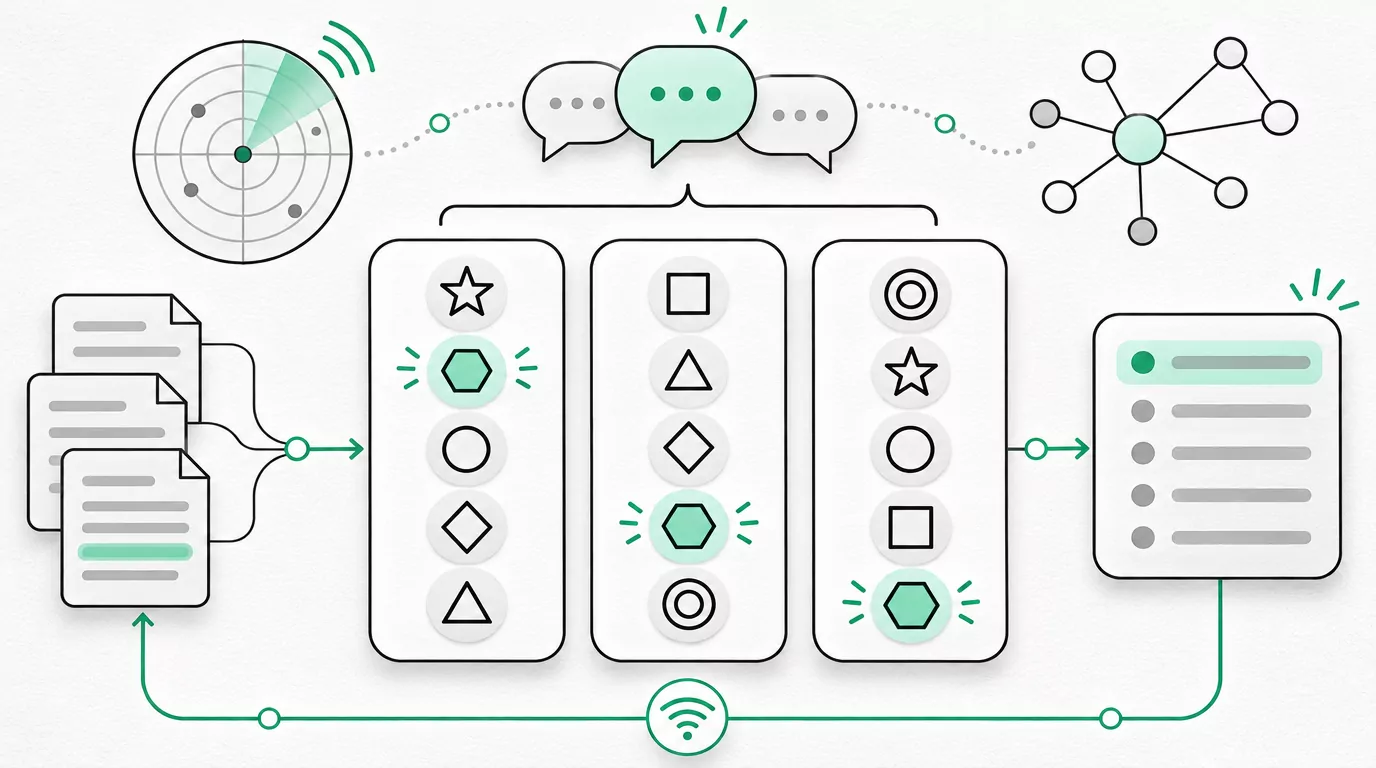
Question and comparison queries usually trigger AI answers
Seer Interactive (April 24, 2026) tracked 30,842 informational queries. Comparison queries triggered an AI Overview 95.4% of the time (267 of 280) and question queries 85.9% (1,214 of 1,413). Even single-word ones triggered one 27.3% of the time.
Wording varies too: in the SparkToro study, 142 volunteer prompts for one need (headphones for a traveling relative) had an average semantic similarity of just 0.081. Yet the answers drew on a fairly steady set of brands.
So plan around intents and question or comparison topics, not exact phrasings. Do not build a page per prompt variant: Google says doing that to manipulate AI answers breaks its scaled content abuse policy.
Sources you do not own carry more weight
Ahrefs (December 12, 2025; 75,000 brands) found YouTube mentions (about 0.737) and branded web mentions (0.66 to 0.71) correlated most with brand mentions in ChatGPT, AI Mode and AI Overviews. These are correlations, not causes or ranking factors. In Ahrefs' March 2026 study, YouTube made up 18.2% of AI Overview citations that did not rank in the top 100.
Google's guide agrees its AI features can show what blogs, videos and forum discussions say about products. It also warns that seeking inauthentic mentions is not as helpful as it seems. Third-party pages can spread wrong facts too, so know how to correct wrong information about your brand.
Clicks are lower when an AI Overview shows, even for cited brands
Seer's April 2026 study covered 53 brands, 5.47M queries and 2.43B organic impressions (January 2025 to February 2026). Brands cited in an AI Overview got 120% more organic clicks per impression than uncited brands on the same results page. But they still got 38% fewer clicks than informational queries with no AI Overview.
Pew Research Center (July 22, 2025) studied March 2025 browsing data from 900 US adults and 68,879 Google searches. Users ended their browsing session on 26% of pages with an AI summary, versus 16% without one.
Both studies show correlation only. Still, on AI Overview queries, judge a page by citations and AI impressions as well as clicks. A lower click rate there does not by itself mean lost visibility.
New AI controls and reports in Search Console and Bing
Search Console's Search generative AI control lets you include your site (the default) or exclude it from AI Overviews, AI Mode and Discover's AI features. Google says it is not a ranking signal for the rest of Search. The Generative AI performance report shows impressions in AI Overviews and AI Mode, and reached all sites worldwide as of August 31, 2026.
Bing's AI Performance report shows citations across Copilot and Bing's AI summaries, plus cited pages and sample grounding queries. A June 16, 2026 update added Intents, Topics, Citation Share and Compare. Bing says Citation Share does not expose competitor domains.
OpenAI keeps GPTBot (training) and OAI-SearchBot (search) as separate settings. AI referrals also hide in other channels, so track AI traffic in GA4 before you judge results.
GEO vs SEO side by side
Here is the difference between GEO and SEO in one view.
GEO vs SEO at a glance (as of November 2026)
| Dimension | SEO | GEO | What the evidence says |
|---|---|---|---|
| Where you appear | Ranked links on a results page | Inside a generated answer, as a named brand or cited source | Google docs; Microsoft Advertising |
| Unit of success | A position and a click | A mention, recommendation or citation, reported as a rate across runs | SparkToro with Gumshoe |
| Stability | Positions shift over time | Brand lists and their order rarely repeat between runs | SparkToro with Gumshoe |
| Query shape | Keyword queries | Question and comparison queries, worded many ways | Seer Interactive; SparkToro |
| Main sources | Your pages and the links pointing to them | Your pages plus what others say about you, including video and forums | Ahrefs (correlation only); Google's guide |
| Clicks | The goal | Fewer, but a citation still lifts clicks versus no citation | Pew; Seer Interactive |
| Engine data | Search Console Performance report, Bing Webmaster Tools | Search Console Generative AI report (impressions), Bing AI Performance (citations); OpenAI does not document a site-owner report | Google and Bing docs |
| Crawl control |
Googlebot and Bingbot rules |
Per-bot rules for OAI-SearchBot, PerplexityBot and Claude-SearchBot, plus Google's AI control |
OpenAI, Perplexity, Anthropic and Google docs |
| What transfers | The foundation | The same foundation: crawl access, indexing, non-commodity content, earned authority | Google's guide; the top 10 studies |
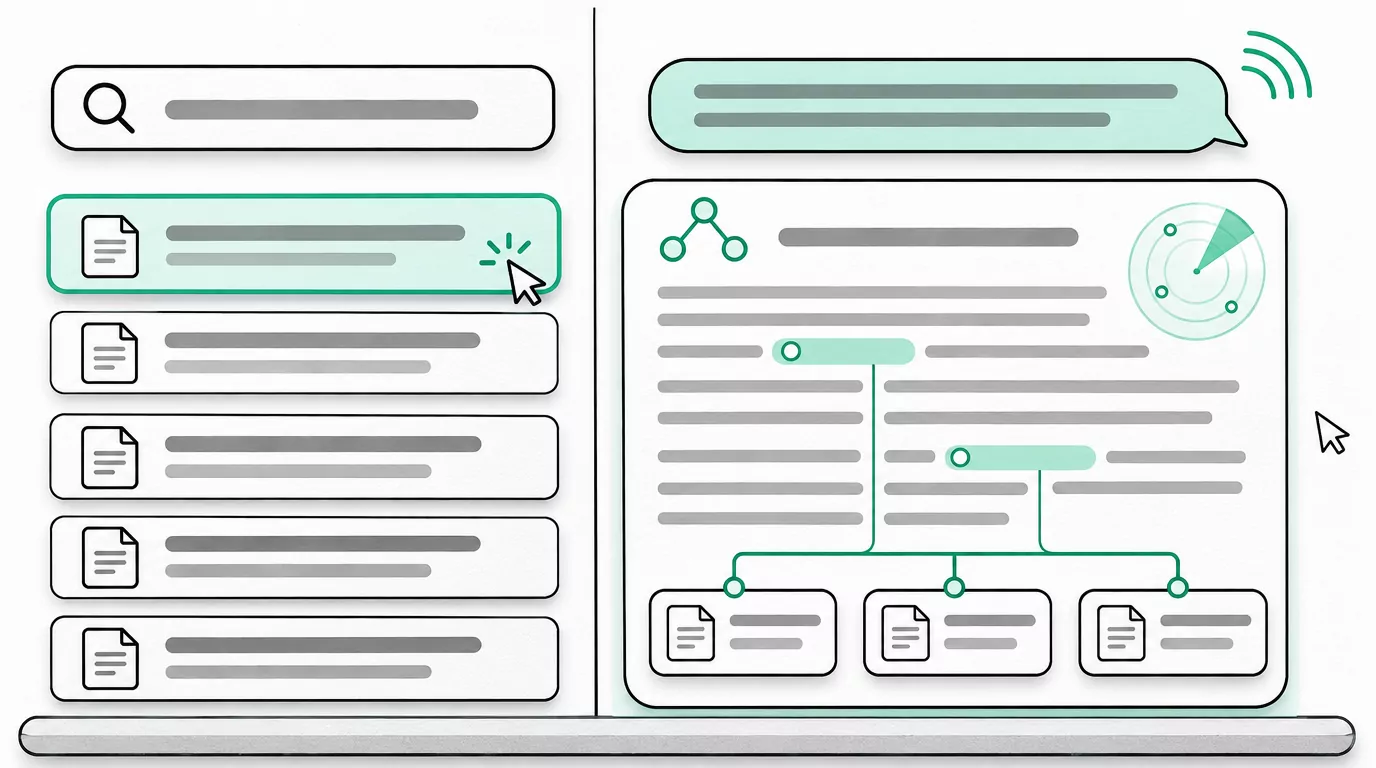
Where does AEO fit?
AEO (answer engine optimization) and GEO are two labels for the same work today. Treat them, and LLM SEO, as one thing.
Google's guide defines AEO and GEO as terms for work aimed at visibility in AI search. Microsoft writes "whether you call it GEO, AIO, or SEO."
Some guides that compare SEO vs AEO vs GEO still tie AEO to featured snippets and voice assistants, such as Art Unlimited (March 16, 2026). That is one usage, not a separate discipline.
Pick one internal label and run it as one workstream with SEO. Spend the saved time on measurement.
How should you adjust team priorities and budget?
Do not cut the SEO foundation, and do not build a separate GEO team on day one. Re-scope the roles you have, add measurement and off-site work, and size the effort to your exposure.
- Size your exposure with data you own. Pull Search Console's Generative AI report for top pages, Bing AI Performance citations and the GA4 AI channel. Then run a fixed set of non-branded buyer prompts, such as "best CRM for a 10-person agency," several times per engine. As a benchmark, Seer found AI Overviews on 36% of informational, 8% of commercial and 5% of transactional queries. A program built on question and comparison content is far more exposed than a product catalog.
- Keep the shared foundation funded. Technical SEO, indexing and non-commodity content serve both channels.
- Re-scope roles, not headcount. Use the table below as a starting map.
- Fund GEO as a time-boxed pilot. Run it inside the current search budget for one quarter, with metrics and a review date set first. Treat any fixed SEO-to-GEO budget split you see as a rule of thumb, not evidence.
- Vet vendors against the engines' own docs. Google warns against tools that promise ranking success or claim to use internal Google metrics, and says no outside tool can access its ranking or AI systems.
| Role | Keeps doing | Adds for AI answers |
|---|---|---|
| SEO lead | Crawl, indexing, rankings | Per-bot crawler access; Generative AI and Bing AI Performance reports |
| Content lead | Briefs, pages, refreshes | Answer-first, sourced pages for question and comparison topics |
| PR and partnerships | Press, partner content | Earned, authentic mentions in press, partner content, video and buyers' review sites (sound advice, not a proven lever); correction requests when AI answers get your facts wrong |
| Analytics | Organic reporting | GA4 AI channel, repeated prompt runs, rates and ranges instead of positions |
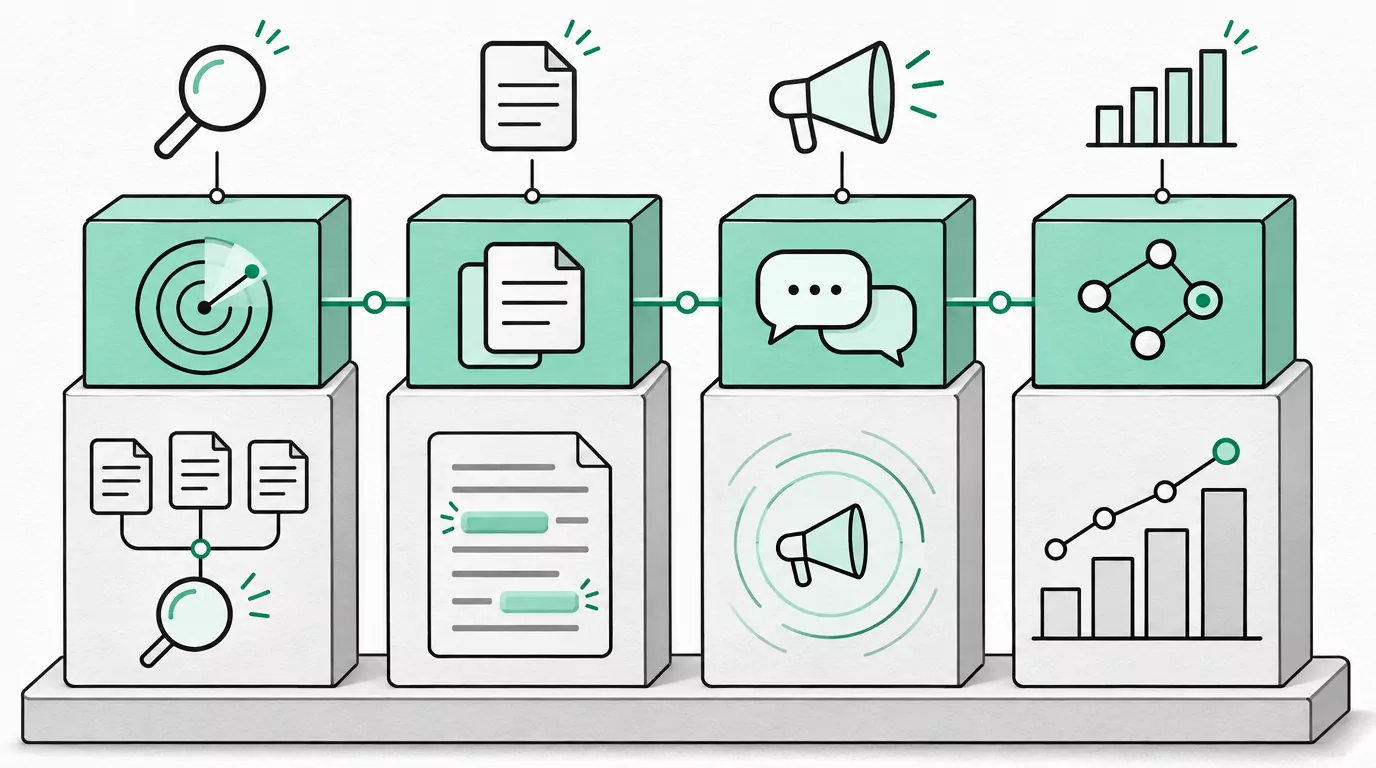
The hard part of step 1 is running those prompt checks often enough to trust the rates. MentionForce is built for exactly this: tracking where AI answers mention your brand, how you compare with competitors, and which sources those answers cite. Follow MentionForce updates on the blog.
Frequently Asked Questions
Will GEO replace SEO?
No. GEO builds on SEO: Google's AI features use its Search index, and ChatGPT, Perplexity and Claude search need crawl access. SE Ranking (June 18, 2026) found AI platforms sent 0.32% of traffic in 2026 so far (0.24% in 2025, 0.02% in 2024), versus 42.75% from organic search. It relies on Google Analytics, which misfiles some AI visits, so 0.32% is a floor.
Is GEO the same as geo-targeted local SEO?
No. Here GEO means generative engine optimization, while geo-targeting is location-based SEO. The two meet in AI answers to prompts like "best dentist in Denver," where assistants name local businesses.
Do backlinks still matter for GEO?
Yes, for discovery: Microsoft lists backlinks among the SEO basics that still matter. But Ahrefs (December 12, 2025) found very weak correlations between backlink counts or URL Rating and AI brand mentions. So keep earning links for rankings, but do not expect them alone to drive mentions.
Do you need separate content for GEO and SEO?
No. One page per topic serves both, and Google says pages need no special rewrite for AI. For content, the generative engine optimization vs SEO difference shows up in the brief: open with a direct answer, source each claim, and cover question and comparison topics.
One thing to do this week: pull last month's Generative AI report in Search Console and list the ten pages with the most AI impressions. That list is where your SEO and GEO work already overlap.