Why Your Competitors Appear in AI Answers and Your Brand Doesn't
Competitors appear in AI answers instead of you for checkable reasons. The engine may not crawl or index your pages, or its training data predates your brand. The comparison and review pages it retrieves may name them and not you, or your category words may differ from the buyer's prompt. Confirm the gap across several runs, then match your symptom to the table.
That is the short answer to "why doesn't ChatGPT mention my brand?" and "why is ChatGPT recommending my competitors?" The same causes apply to Perplexity, Claude, Gemini, Copilot and Google AI Overviews, though each engine reads different sources.
Is the gap real, or is your check misleading?
One answer proves nothing, and a check from your own logged-in account is personalized. Test like a stranger before you change your site.
SparkToro's research, published in January 2026, shows why. Rand Fishkin co-led it with Patrick O'Donnell of Gumshoe, a startup that sells AI tracking, and it is a blog study, not a peer-reviewed paper. Its 600 volunteers ran 12 prompts through ChatGPT, Claude and Google's AI Overviews or AI Mode, 2,961 runs in all.
It found less than a 1 in 100 chance that ChatGPT or Google's AI gives the same list of brands twice. Its authors suggest that how often a brand appears across many runs is probably a fair measure.
OpenAI's Memory help page says ChatGPT can draw on past chats, saved memories and custom instructions, and its web search help page says memory can shape the query it writes and IP-based location can shape local results.
Test in a ChatGPT temporary chat set to Unpersonalized, which OpenAI says "Does not use memory, custom instructions, or plugins", or logged out, from one location. Run each unbranded buyer prompt several times. Keep branded prompts such as "What does [brand] do?" in a separate list: they test whether the engine knows you, not whether it recommends you.
Check today: rerun your top buyer prompts several times in an Unpersonalized temporary chat and note how often you appear.
Why doesn't ChatGPT mention my brand? Match the symptom to the cause
Most gaps trace to one or two causes in this table, and each leaves a different sign. Find your symptom, run the check, then apply the fix.
These are causes to diagnose, not weighted ranking factors.
| # | Symptom | Likely cause | How to check | What to do |
|---|---|---|---|---|
| 1 | Your test shows you but a colleague's does not, or results flip daily | A misleading check: one run, memory or branded prompts only | Rerun unbranded prompts several times, unpersonalized, from one location | Fix the test. Report a rate across runs |
| 2 | Never cited, even for "What does [brand] do?" with search on | A crawler is blocked by robots.txt, the CDN or a firewall |
Read robots.txt for OAI-SearchBot, PerplexityBot, Claude-SearchBot, Googlebot, bingbot, Google-Extended. Check CDN logs for 403s to ChatGPT-User, Claude-User, Perplexity-User
|
Allow search crawlers. Decide training bots (GPTBot, ClaudeBot) separately |
| 3 | Missing only from AI Overviews, AI Mode or Copilot | Page not indexed, not eligible for a snippet, or excluded | URL Inspection in Search Console and Bing. Look for noindex, nosnippet, max-snippet or a Search Console AI exclusion
|
Fix indexing, snippet and AI controls. Submit sitemaps to Bing |
| 4 | Cited, but your features or prices are missing | Key content needs JavaScript (mostly outside Google) | Use curl or view source and search for the copy |
Server-render the facts you want cited |
| 5 | Without search, the engine does not know you | Your brand is newer than the training data | Compare your launch or rename date with the model's cutoff | Work the live-search route: crawlable pages, third-party coverage |
| 6 | Asked by name, it hedges, confuses you or describes an old product | Thin or conflicting entity facts | Compare name, one-liner and category on your site, LinkedIn, Crunchbase, G2 and directories | One name, category and description everywhere. Wrong facts: use the correction steps |
| 7 | Cited for branded prompts, missing from "best [category]" answers | You are absent from the roundups and review pages engines retrieve | Log every cited URL: does it name the rival, you, both or neither? | Get listed in your rival's review-site categories. Earn a place on recurring lists with checkable facts. No fake reviews |
| 8 | You show up for your own label, not the buyer's phrase | Your category words differ from buyer prompts | Compare buyer phrasing from sales calls, tickets and Bing grounding queries with your H1 and listings | Lead with the buyer's category term |
| 9 | For "[brand] alternatives" prompts, cited pages sit on a rival's domain | Competitors own your comparison pages | Run those prompts and note who publishes each cited page | Publish fair, dated comparison pages yourself |
| 10 | (Ecommerce) Rival products show in ChatGPT shopping, yours do not | Your product data is not shared | OpenAI says Shopify and Etsy catalogs are already integrated. Otherwise, check whether you applied | Apply on ChatGPT's merchants page |
Check today: pick the rows whose symptom you saw.
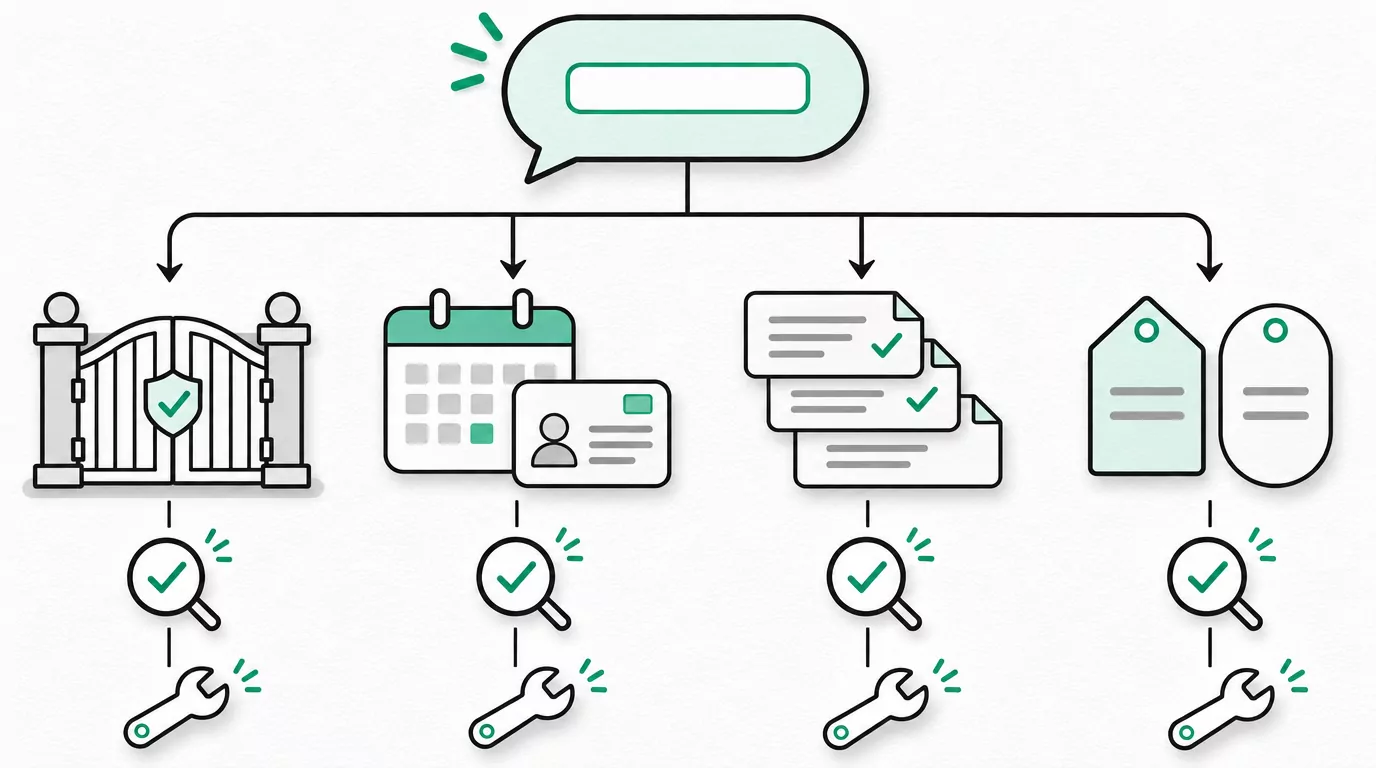
Can each engine reach and index your pages?
An engine cannot cite a page its search crawler cannot fetch or its index does not hold, even if it loads fine for you. Rows 2 to 4 live here.
Read robots.txt bot by bot
OpenAI says sites opted out of OAI-SearchBot "will not be shown in ChatGPT search answers"; GPTBot is its separate training control. Perplexity recommends allowing PerplexityBot. Anthropic says blocking Claude-SearchBot or Claude-User may reduce your visibility in user search results.
Google says Googlebot rules, not Google-Extended, control AI Overviews and AI Mode. But Google said on October 30, 2026 that sites allowing Google-Extended are eligible to appear via grounding in Gemini Apps.
User-triggered fetchers differ: OpenAI says robots.txt rules "may not apply" to ChatGPT-User, and Perplexity says Perplexity-User "generally ignores robots.txt rules". Check your CDN or firewall for them and Claude-User.
Check the CDN, not only the file
Cloudflare announced default blocking of AI crawlers for new domains on July 1, 2025. Its docs, updated November 2, 2026, say new domains now default to Allow. Check your zone's AI Crawler and Agent access policies and AI Crawl Control.
Which index does each engine's live search use?
Google's AI features guide says a supporting page must be "indexed and eligible to be shown in Google Search with a snippet". Search Console's Search generative AI control can also exclude a site. Microsoft reports Copilot citations in Bing Webmaster Tools (AI Performance, in public preview since February 10, 2026), which suggests, but does not state, that Bing's index feeds Copilot. OpenAI says ChatGPT search needs OAI-SearchBot access and "sometimes partners with other search providers".
Is the content in the HTML?
Vercel's December 17, 2024 analysis found the OpenAI, Anthropic, Meta, ByteDance and Perplexity crawlers it measured did not render JavaScript, while Gemini uses Googlebot's setup, which does. OpenAI does not document whether its crawlers render JavaScript today, and the study is almost two years old.
Check today: open yourdomain.com/robots.txt, your CDN's AI crawler settings, and URL Inspection in Search Console and Bing Webmaster Tools for five key pages.
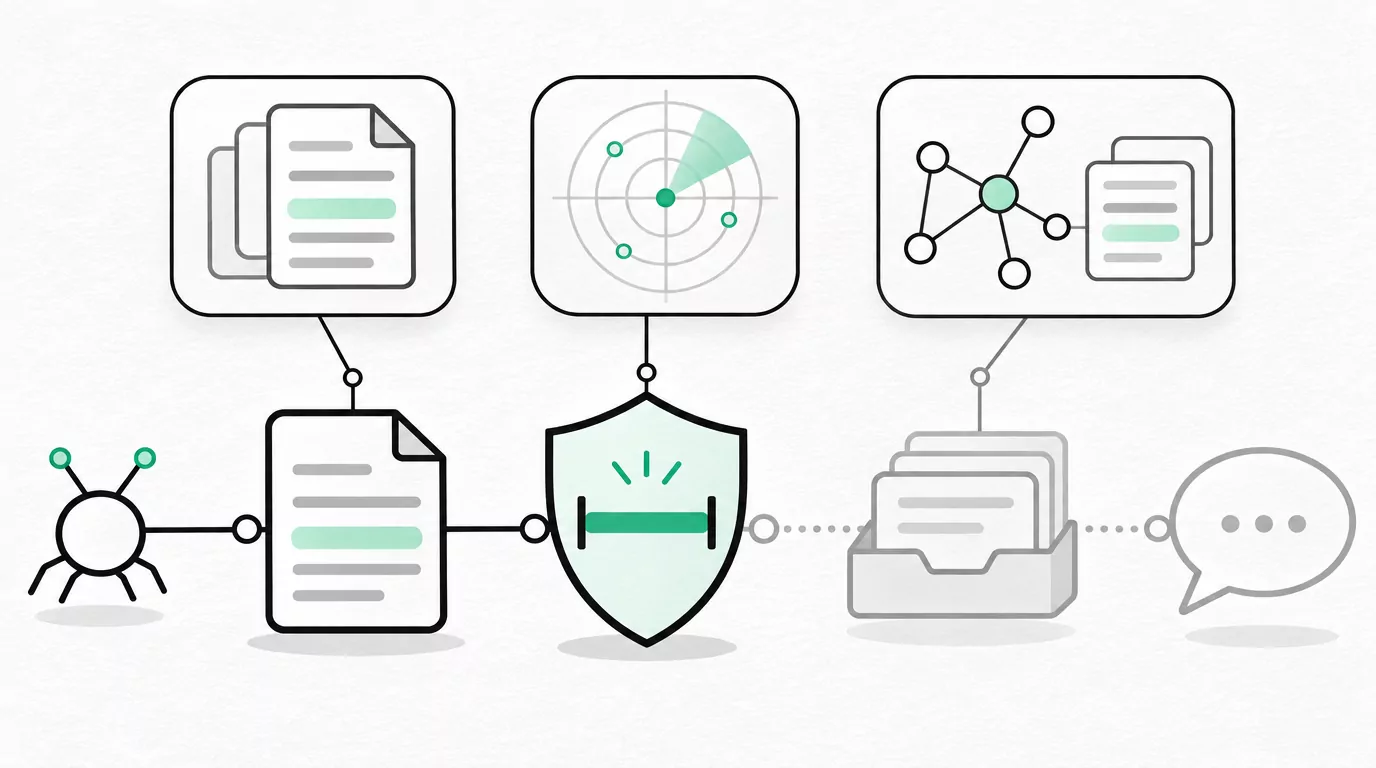
Does the engine know who you are?
If the engine cannot describe you when asked by name, the problem sits upstream of recommendations. Either your brand is newer than the model, or the web describes you in conflicting ways. Rows 5 and 6 live here.
Is your brand newer than the model?
OpenAI says ChatGPT "may search the web automatically when your question would benefit from current information". Otherwise it answers from trained knowledge, which stops at a cutoff. As of November 2026, OpenAI lists September 30, 2024 for its previous GPT-5 model and April 30 to June 1, 2026 for its current GPT-6 API models. Anthropic's models overview lists a reliable knowledge cutoff of June 2026 for current Claude models.
Chat apps can run different models from these API lists, so treat the dates as a guide. Ask "What does [brand] do?" and see whether the answer shows sources (it searched) or none (trained knowledge). No form gets you into training data, so work the live-search route.
Are your entity facts consistent?
This is the practical core of entity SEO. Your site, LinkedIn, Crunchbase, G2 or Capterra, app stores and directories should show the same name, one-line description and category.
Google's guide to generative AI features (updated July 10, 2026) says structured data isn't required for generative AI search, so treat Organization schema as hygiene, not a lever. If engines state wrong facts rather than leaving you out, fix wrong AI answers about your brand at the source.
Check today: run the branded prompt with search on and off, and paste both answers next to your About page.
Are you on the pages engines retrieve for your category?
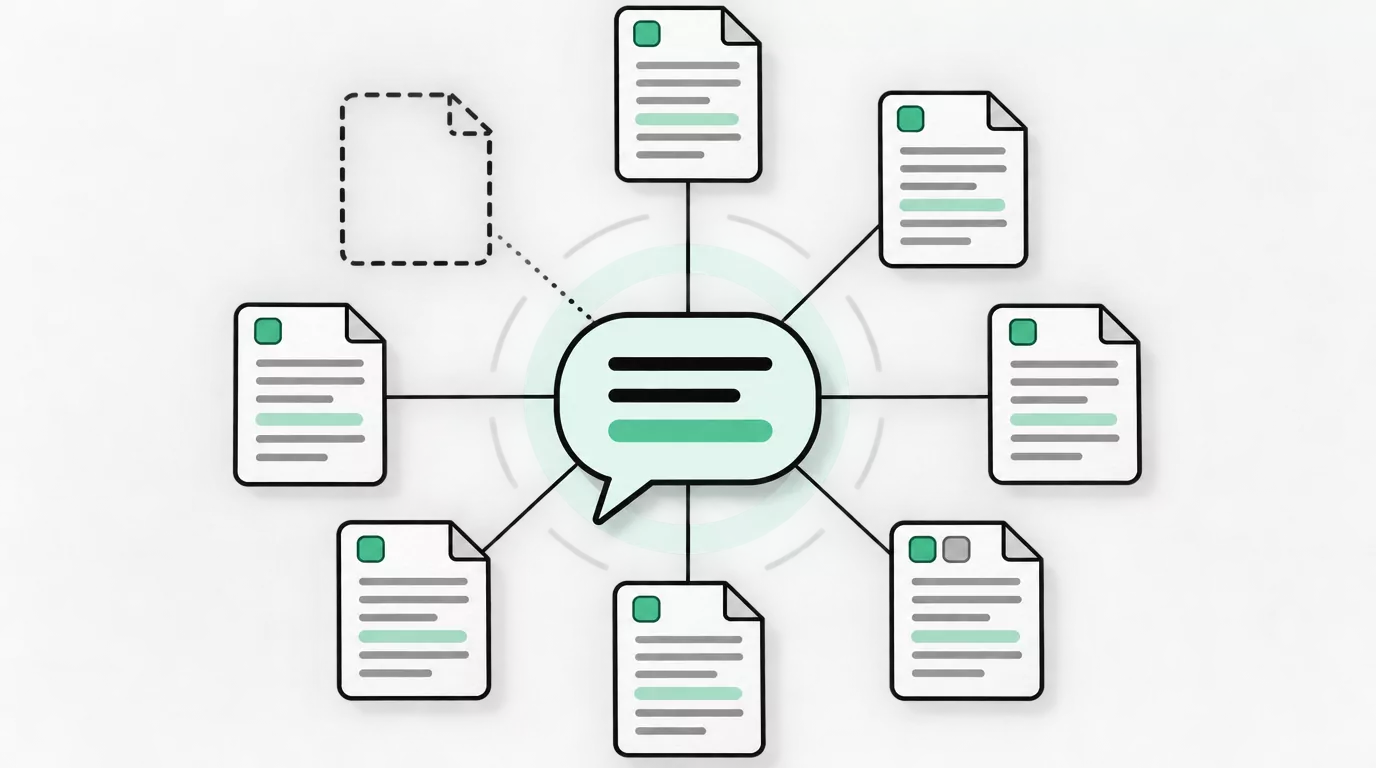
For "best [category]" prompts, engines lean heavily on roundups, review category pages and comparisons, and tend to name the brands those pages name. If the cited pages name your competitor and skip you, that is the gap. Row 7 lives here.
Ahrefs' December 4, 2025 study by Glen Allsopp covered 750 top-of-funnel prompts about software, products and agencies, with 26,283 source URLs. "Best X" blog lists made up 43.8% of the page types ChatGPT cited, including lists where the publisher ranked itself first. Brands placed higher in lists tended to be recommended more, though that does not prove cause.
The mix shifts by model. David Konitzny's August 10, 2026 analysis of transactional prompts found listicles fell from 15.47% to 8.19% of retrieved pages with GPT-5.6, while product pages from brands or retailers became the top type at 16.39%. He published no sample size. Lists still matter, and product pages matter more than before.
For Google AI Overviews, Ahrefs' May 26, 2025 study of 75,000 brands found brand web mentions correlated with visibility at 0.664, against 0.218 for backlinks. That Spearman correlation shows a link, not a cause.
| Cited page (Illustration) | Page type | Names competitor? | Names you? |
|---|---|---|---|
| "10 best project tools for agencies" on a software blog | Roundup | Yes | No |
| Project management category on a review site | Review category page | Yes | No |
| A rival's own "top tools" list, with itself first | Self-ranked list | Yes | No |
| Trade press feature on remote teams | News feature | Yes | Yes |
Skip fake reviews, undisclosed paid placements and forum seeding: Google's guide lists "pursuing inauthentic mentions" among tactics you can ignore.
Check today: paste every cited URL from your runs into those four columns and sort by "names competitor, not you".
Does your category wording match how buyers ask?
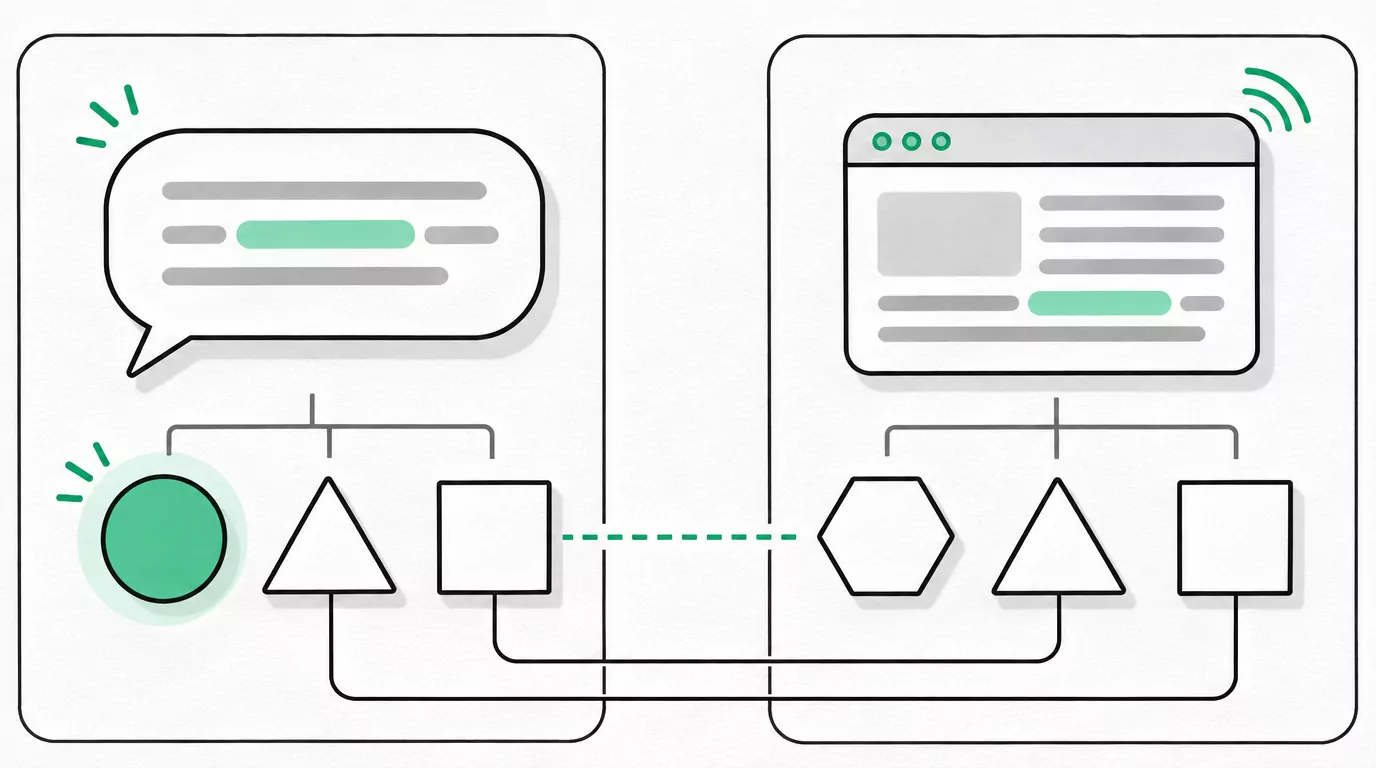
Engines turn a prompt into their own search queries. If your pages use a label buyers never type, the searches behind the answer may never reach you. Row 8 lives here.
OpenAI says ChatGPT search "typically rewrites your query into one or more targeted queries" for its search partners. Google says AI Overviews and AI Mode may use "query fan-out", "issuing multiple related searches across subtopics and data sources". Bing's AI Performance report shows "grounding queries", the phrases the AI used to retrieve your cited content.
List 10 phrasings buyers use, from sales calls, support tickets and review-site categories, and compare them with your H1, title tag and listings. Then lead with the buyer's term.
Illustration: a made-up brand calls itself a "conversation intelligence layer" while buyers ask for "call recording software", so searches may find rivals instead. The same goes for use cases. If buyers add "for sales teams", your pages should say it too. Small variants matter less: Google says its AI systems "can understand synonyms".
Check today: put your homepage H1 next to the review-site category your competitor is listed under.
Who owns the comparison and alternatives pages for your brand?
When buyers ask for "[your brand] alternatives" or "[you] vs [competitor]", engines retrieve whoever published those pages. Often that is your competitor. Row 9 lives here.
Run both prompt types, search Google and Bing for the same phrases, and note which domain each cited page sits on.
Publish fair comparison and alternatives pages on your own site. Date them, source every claim, and say plainly where a competitor fits better. Never change only the date to look fresh.
Check today: run "[your brand] alternatives" five times and count how many cited pages you control.
What if the competitor simply has a head start?
Sometimes nothing is broken. The competitor has years of reviews, coverage and listings, and the engines reflect that. The fixes above still apply, but expect months, not days, and nobody can promise a result.
In the May 2025 Ahrefs study, 26% of the 75,000 brands had zero mentions in AI Overviews. Suspect paid placement? See the FAQ.
Run the same prompt set each month. Add Search Console's generative AI performance reports (launched June 3, 2026; available to all sites since August 31, 2026) for AI Overviews and AI Mode impressions, and Bing's AI Performance report for Copilot citations. An AI channel group in GA4 shows the visits that do arrive.
Check today: save this month's prompt set, so next month's run compares like with like.
What should you fix first?
Fix in dependency order, because an earlier blocker hides the effect of every fix after it.
- The test. A misleading check hides every real result.
- Crawler and CDN access. A blocked crawler hides every other fix.
- Indexing and snippets. A page outside the index cannot be cited.
- Content in the HTML. Facts behind JavaScript stay hidden from crawlers that skip it.
- Entity facts. Mixed descriptions blur the brand that new coverage points to.
- The source gap. List placements help less while the engine cannot place you.
- Category wording. The right pages still miss buyers who use another phrase.
- Comparison pages. These work best once the steps above hold.
Re-run the same prompts after a recrawl. OpenAI says robots.txt changes can take about 24 hours to reach its search systems. Outside coverage and trained knowledge take much longer, and no engine publishes a timeline. Tracking AI traffic in GA4 shows whether visits rise after fixes.
Comparing your brand with competitors across AI answers, and seeing which sources those answers cite, is the job MentionForce is built for. Follow MentionForce updates.
Frequently Asked Questions
Why doesn't ChatGPT mention my brand?
The usual causes are access, training data, cited pages and wording. Ask "What does [brand] do?" with search on, then off. If no cited source is on your domain, check access and indexing. If it knows nothing without search, your brand may be newer than the training data. If it describes you correctly but skips you in "best [category]" answers, check cited pages and wording.
Why is my brand not showing up in ChatGPT, and what should I check first?
Check your test, then access. Rerun your buyer prompts in an Unpersonalized temporary chat or logged out, several times each. If you are still missing, confirm robots.txt allows OAI-SearchBot and your host or CDN allows OpenAI's published searchbot IP addresses.
Is my competitor paying to appear in ChatGPT answers?
Not in the answer text, according to OpenAI. Its January 16, 2026 ads principles say "Ads do not influence the answers ChatGPT gives you" and "Ads are always separate and clearly labeled." So check whether you saw a labeled ad. This covers ChatGPT only.
Why does my brand show up in Perplexity but not in ChatGPT or Google AI Overviews?
Each engine fetches with its own crawler and draws on different indexes: PerplexityBot for Perplexity, OAI-SearchBot for ChatGPT search and Google's index for AI Overviews. So check each engine's rows separately. A Google-Extended block can keep you out of grounded Gemini app answers, but it does not affect AI Overviews or AI Mode, which follow Googlebot rules.
I asked twice and got different answers. Which one is right?
Neither on its own. Treat each answer as one sample and measure how often you appear across many runs.